






Dimensional Engineering
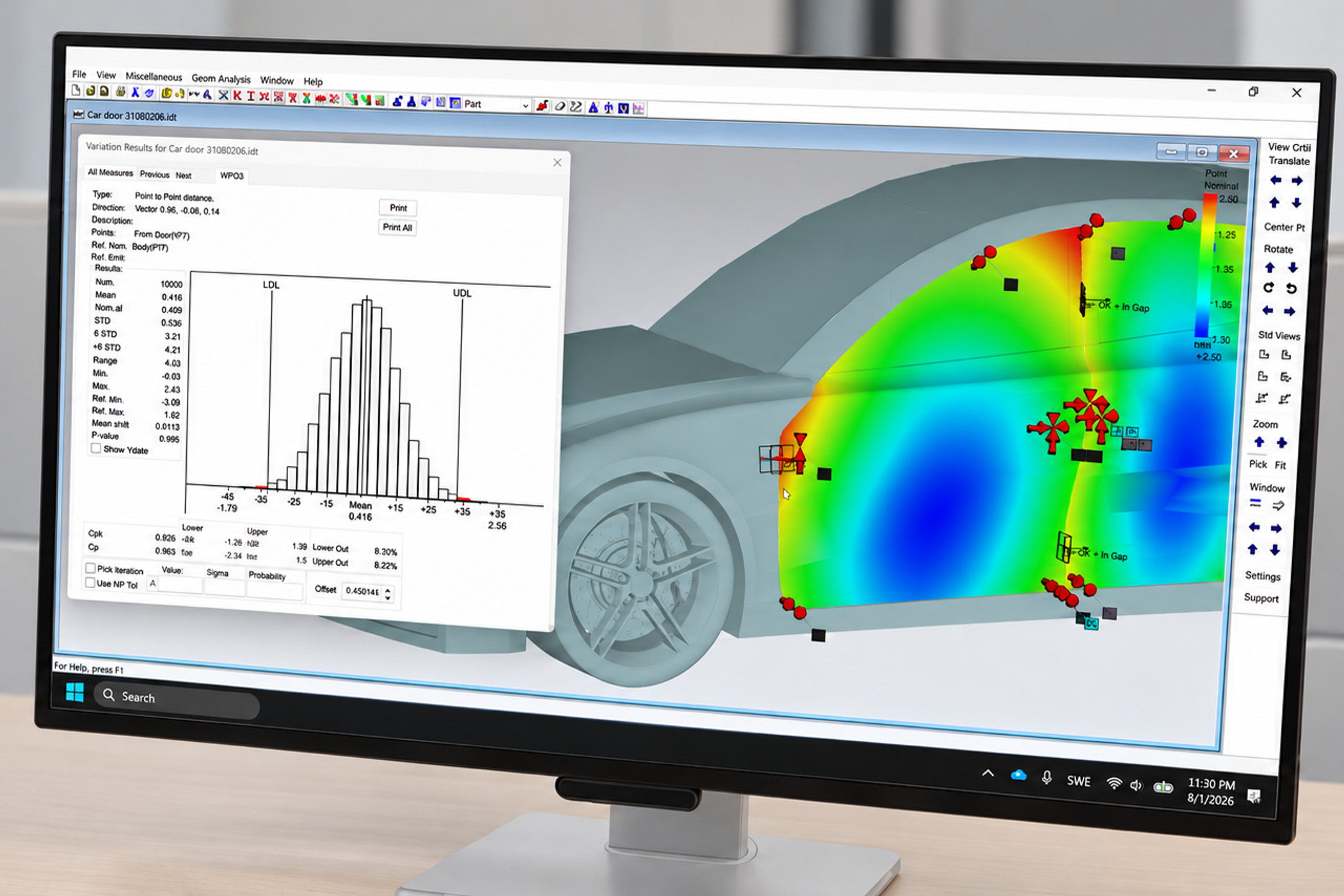
Every manufacturing process varies: tool positioning, material flow, and dozens of other small effects add up into ordinary variation that tends toward a normal distribution around nominal. That variation is expected, not a defect. The aim isn't eliminating it. It's a design that tolerates it, and requirements clear enough to say how much is acceptable and where.
Dimensional engineering connects those requirements to the GD&T on the drawing, the locating strategy in the plant, and the measurement data that comes back once production starts, catching problems while they're still design decisions. In some organizations this is called geometry assurance, in others dimensional management. The work is the same.
One company, the whole process
Dimensional engineering is usually a small group inside an OEM, or at a general consultancy a small service offering, if offered at all. At PE Geometry, it's the entire company: engineers in the US, Sweden, and India working the full span, from early requirements through production data. The same team reviewing your drawings knows what the measurement lab will do with those datums; the people analyzing your launch data understand the simulation behind the tolerances. And when a challenge calls for advanced dimensional engineering, the depth of the whole company stands behind whoever is on your program.
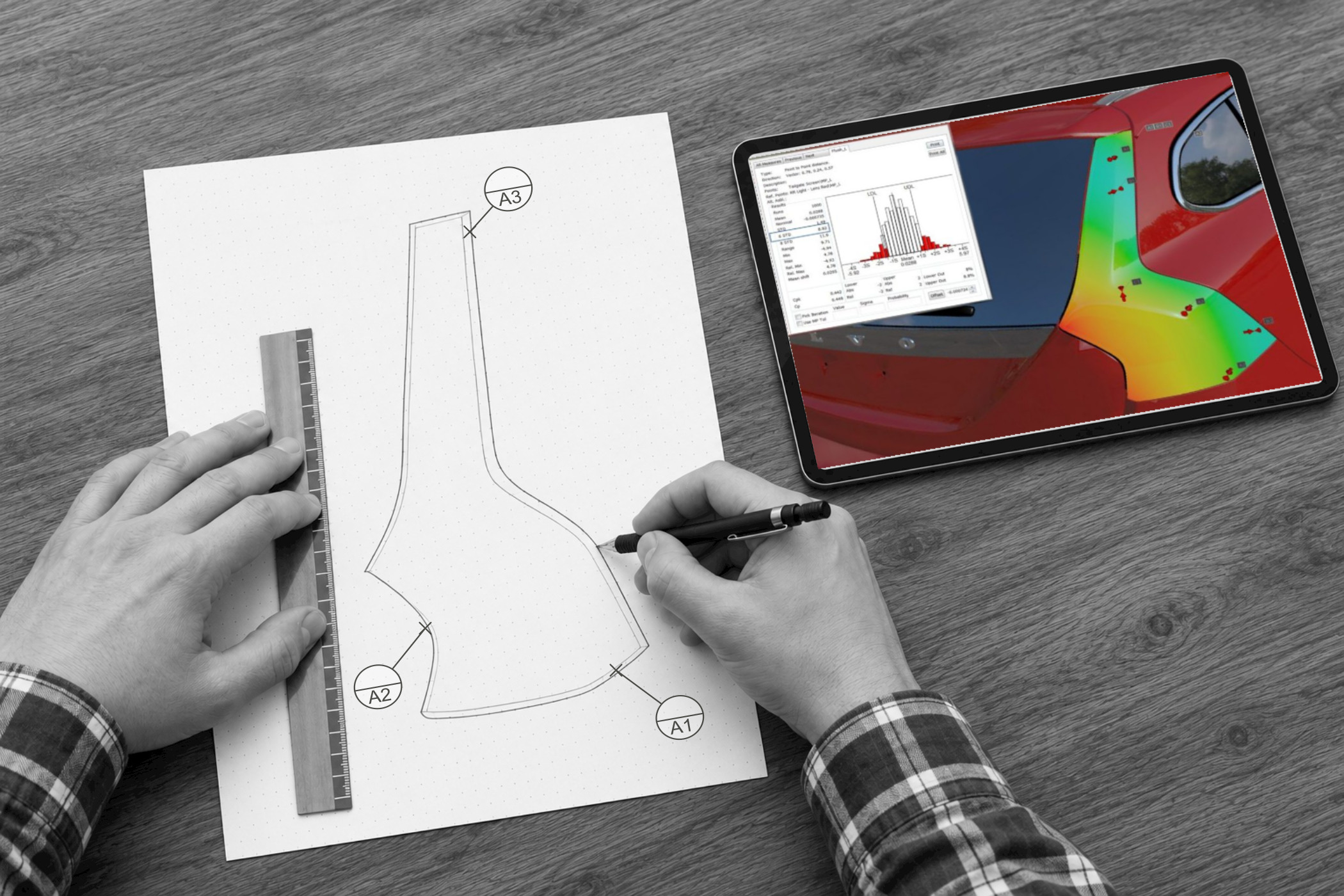
What dimensional engineering includes.
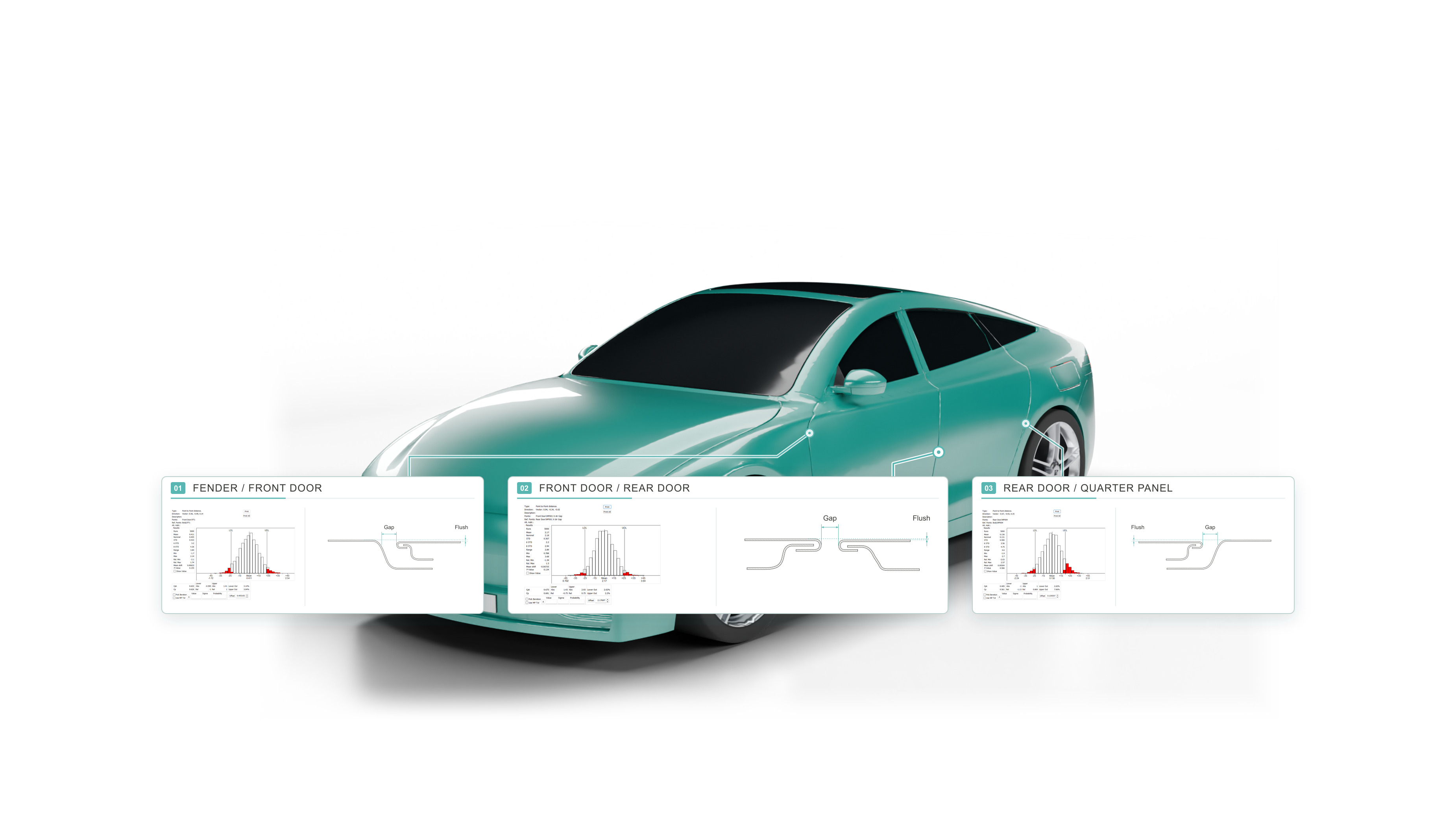
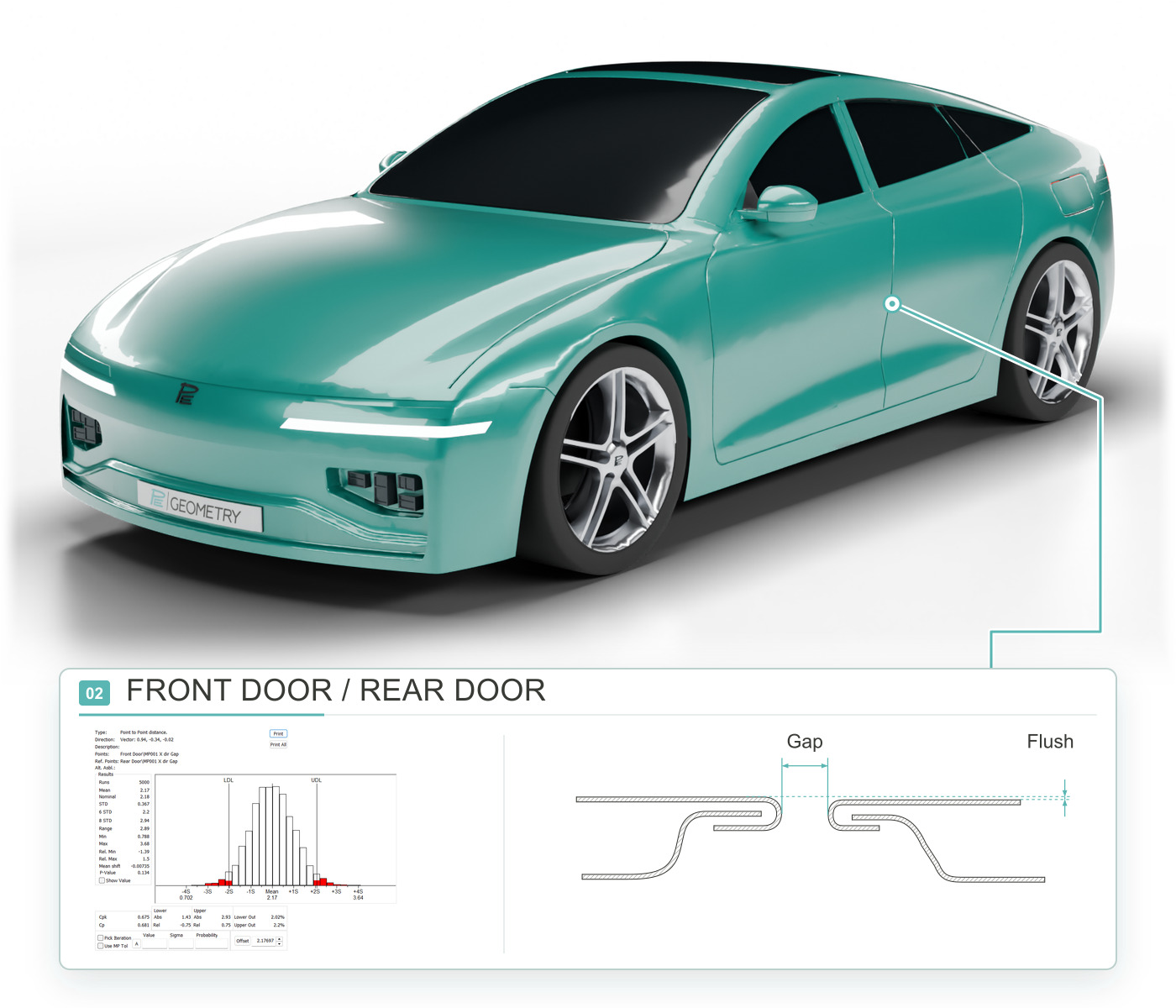
- Functional & aesthetic requirements, GD&T: Turning requirements into GD&T that design, manufacturing, and quality all read the same way. That includes functional requirements like assemblability, sealing, and accuracy, and aesthetic requirements like gap and flush, where the target is fit and finish as much as hard function.
- Datum & locating strategy: Locating schemes that stay stable station to station, with one consistent datum reference frame (DRF) across design, tooling, and measurement. Done early, before tooling, this is where we influence how parts locate to each other and to fixtures, making the assembly insensitive to locating variation. It's the most cost-effective way to reduce variation: robustness designed in, instead of tolerances tightened later.
- Tolerance analysis & variation simulation: 3D tolerance stack-up and variation simulation, from 1D worst-case and statistical (RSS) stacks to full virtual assembly models. Built in RD&T (our primary tool), or in 3DCS or VisVSA where that's the customer's environment, the models show which contributors matter most before tooling exists.
- Design & drawing reviews: Catching locating conflicts and unverifiable tolerances while they're still a markup, not a tooling change.
- Measurement planning & physical measurement: Inspection plans tied to the actual requirement, including review and validation of check fixtures, with the physical measurement (portable CMM, 3D scanning) done by us, not handed off.
- Production & launch support: Analyzing build, PPAP, and first article inspection (FAI) data to separate real part variation from fixture or measurement effects.

When we typically get involved
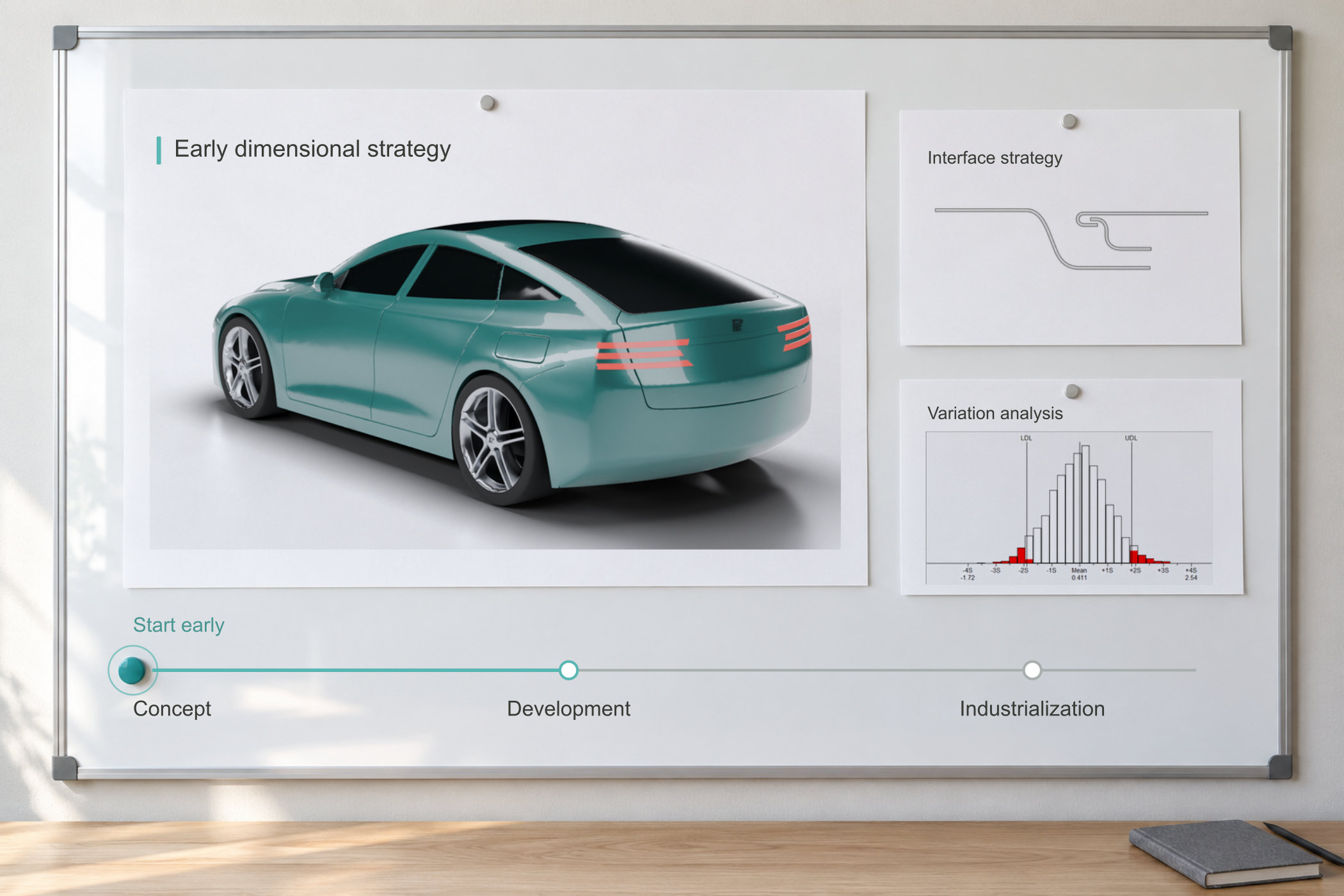
- Early development, while locating and tolerance concepts are still being set
- Before drawing release, to confirm tolerances can be met and verified
- Mid-program, for added tolerance analysis capacity
- At launch, when builds show deviations that need explaining
- In production, when an issue keeps recurring
How we deliver
Some programs need a dimensional engineer embedded in the team for a development cycle. Others need a defined piece of work: scoped, delivered, done. We support both, on-site or remote, and adjust our involvement as the program changes.
A single tolerance study, or the full process. Tell us where things stand.
Frequently Asked Questions

We work in the major tolerance simulation tools, such as RD&T, 3DCS, and VisVSA, and adapt to whatever environment your organization already runs.
ASME Y14.5, ISO GPS, or your company's own standard.
Yes. Our engineers regularly work inside customer systems, on-site or remote.
Earlier than most people think. The locating and tolerance decisions with the largest cost impact happen before tooling. But we also join programs mid-stream and at launch.