







Dimensional Engineering Process Development
PE Geometry helps companies build the processes, working methods, and competence that make geometry work run reliably across programs.
The right activity at the right time
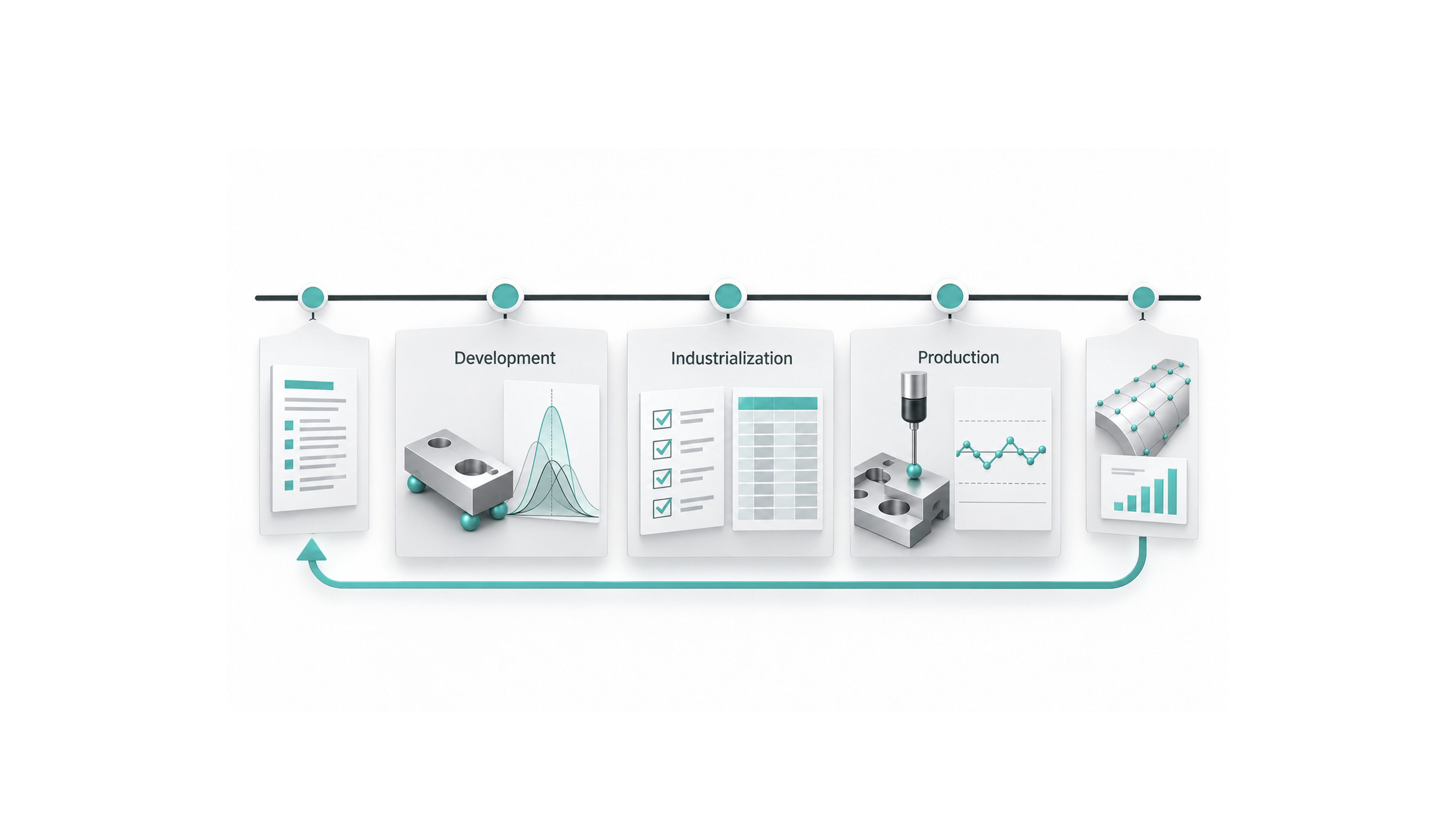
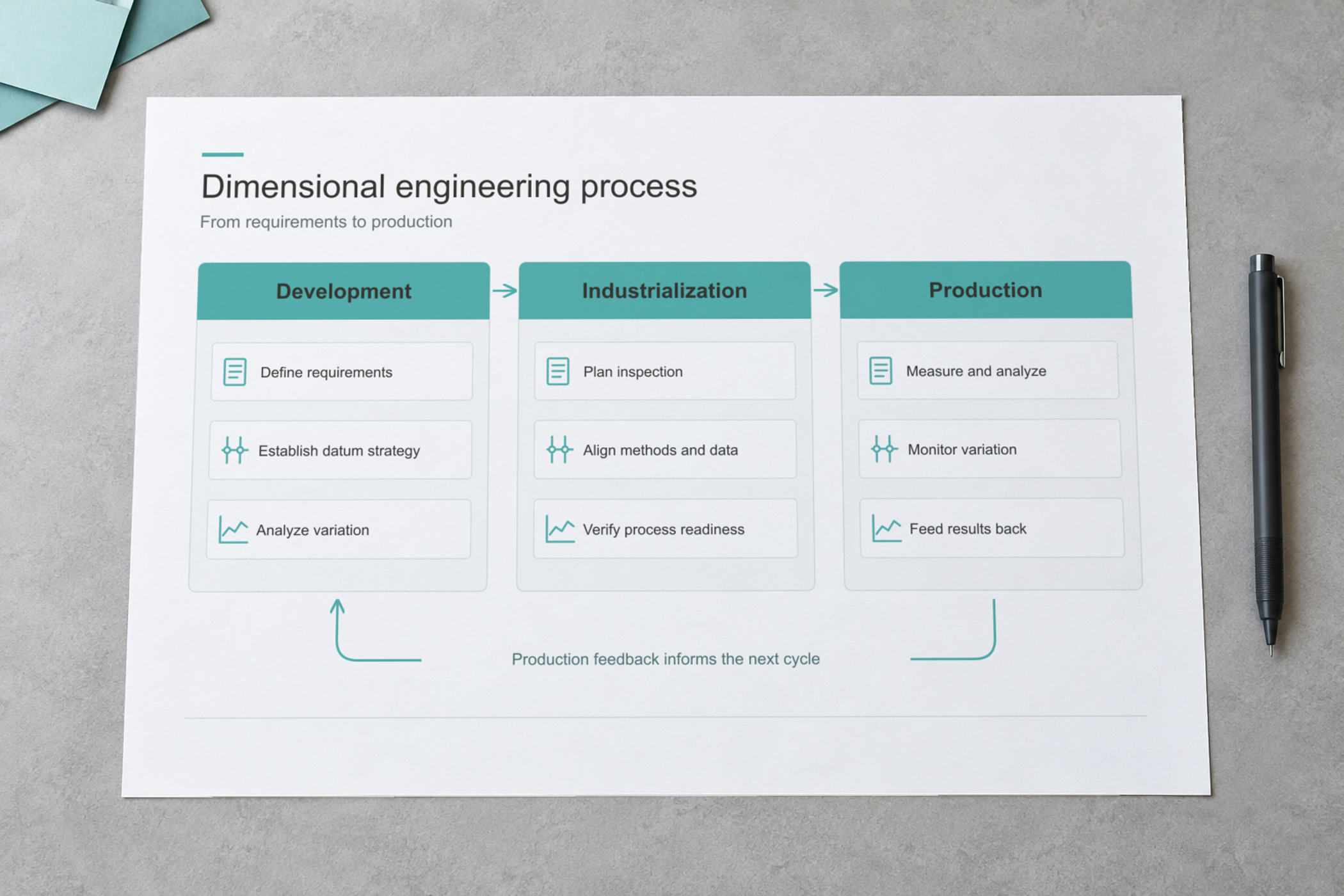
Most dimensional problems aren't caused by a lack of skill. They're caused by process gaps: tolerance decisions made too late, measurement data nobody acts on, simulation and inspection run by groups that never talk. We help define how geometry work should run in your organization, whether it lives with dimensional engineering specialists or is shared across design, manufacturing, and quality roles.
Which activities happen when, what gets delivered by whom, and how the geometry process ties into your overall development process, cross-functionally. Do the right thing at the right time, and the results follow.
What this looks like in practice
For a commercial vehicle OEM, we helped define the geometry assurance process itself: how to work with variation simulation, when activities should take place, and what deliverables cross-functional teams owe each other at each stage of development. That work has continued for years, refining working methods as the organization and its programs evolved, and lately extending into new software solutions that carry the process.
Not every organization needs a dimensional engineering department, and we don't push one. For many companies the right answer is clear geometry responsibilities and working methods inside the roles that already exist. For others it's building a dedicated function step by step. We've supported both, and part of the process work is finding which fits your organization and volume of geometry work.
It connects to everything we do
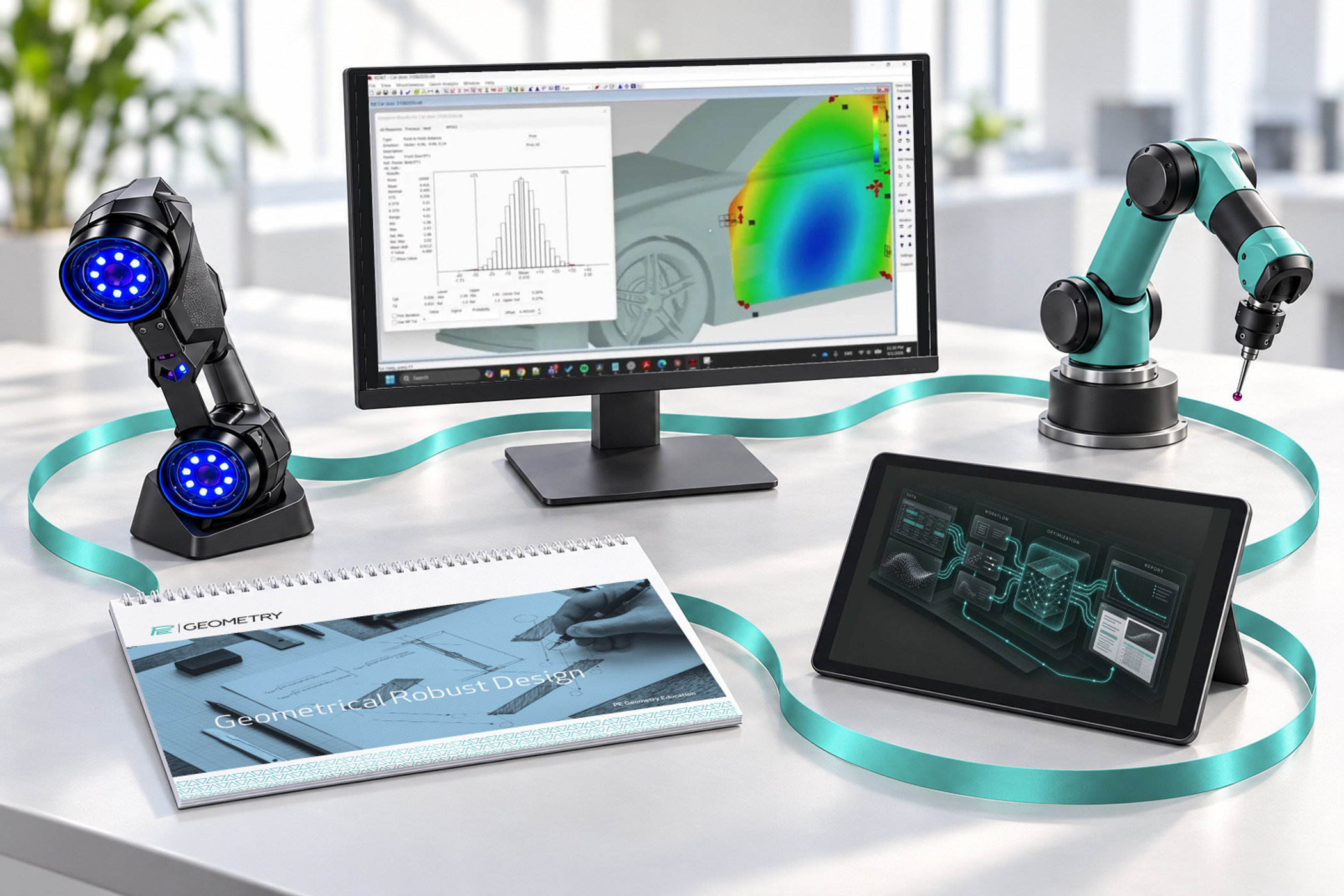
Process work rarely travels alone. A better working method often calls for training to spread it, a custom tool to carry it, or measurement capability to feed it. And because we take part in industrial research, the methods we bring are current, not just proven practice but where the field is heading. This is where our services combine: process definition supported by training, software development, metrology, research, and hands-on dimensional engineering, in whatever mix the situation needs.
Frequently Asked Questions

No. For many organizations the right answer is clear geometry responsibilities inside existing design, manufacturing, and quality roles.
From a focused review of one working method to multi-year support as your organization grows. Scope decides.
No, but they combine well: training spreads a method, tools carry it, measurement feeds it.
Earlier than most people think. The locating and tolerance decisions with the largest cost impact happen before tooling. But we also join programs mid-stream and at launch.